
How on-demand water heaters work, where they fit and what to confirm before converting from a storage tank.
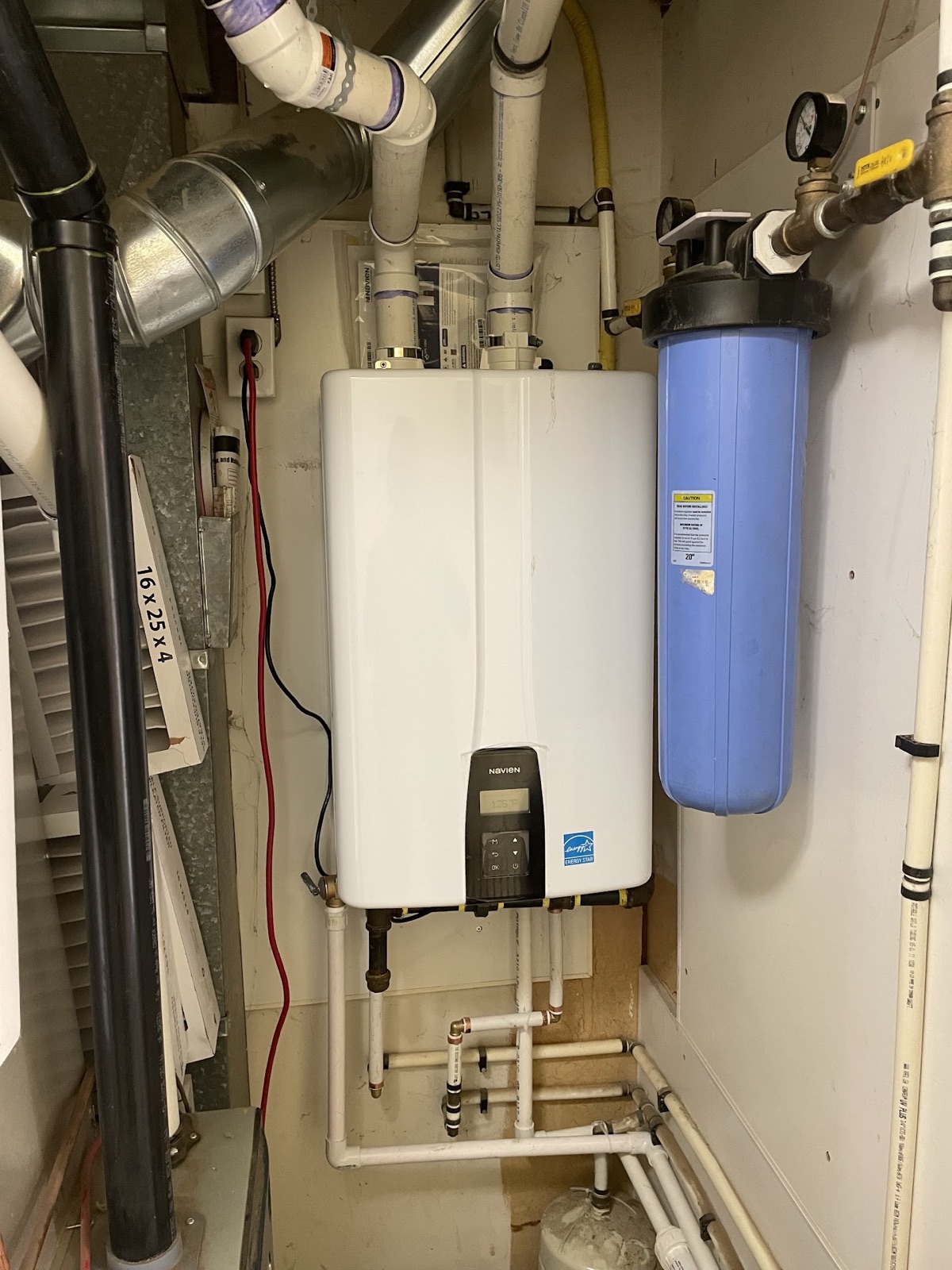
Representative High Demand Heating project photo. The customer address and exact project location are intentionally omitted for privacy.
How an on-demand water heater works
When a hot-water fixture opens, the unit senses flow and activates its burner or heating elements. Water is heated as it passes through the heat exchanger. When demand stops, the unit stops heating rather than maintaining a stored tank of hot water.
This reduces standby heat loss and frees floor space, but it does not mean unlimited simultaneous capacity. Every model has a maximum flow it can heat by a given temperature rise.
Tankless versus a storage tank
A storage tank holds a ready volume of hot water and can serve short periods of high demand until that supply is depleted. A tankless unit can run longer, but several showers and appliances at once may exceed its flow capacity.
A useful comparison includes household demand, recovery expectations, available space, installation work and maintenance—not just the appliance purchase price. In some homes, replacing a tank with another tank is the simplest practical choice.
Installation requirements can change the decision
A gas tankless conversion may require changes to gas piping, venting, combustion air, condensate drainage, electrical service and water piping. Electric tankless models can require substantial electrical capacity. The incoming water temperature also affects how much hot water the unit can deliver.
A site assessment should confirm these requirements before a model is selected. It should also consider where the unit can be serviced and whether the chosen capacity matches real simultaneous use.
Tankless systems still require maintenance
Mineral scale and debris can reduce heat-transfer performance. Maintenance frequency depends on water quality, use and the manufacturer's requirements. Filters, condensate components, venting and combustion should also be checked as applicable.
If a tankless water heater displays an error code, loses temperature during use or makes unusual noise, record the code and call for diagnosis. Do not remove covers or bypass safety controls.