
Safe, simple checks to make before requesting furnace service—and the warning signs that mean stop and call promptly.
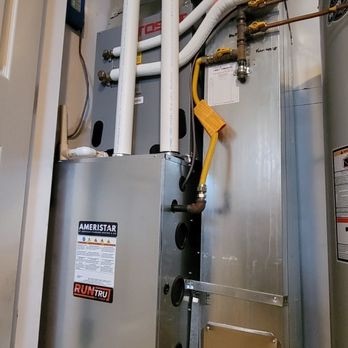
Representative High Demand Heating project photo. The customer address and exact project location are intentionally omitted for privacy.
Start with safety
If you smell gas, see smoke, hear arcing or notice scorching, leave the area and follow emergency guidance from the gas utility or emergency services. Do not operate switches, relight equipment or try to locate a gas leak yourself.
If a carbon-monoxide alarm sounds, get everyone, including pets, outside immediately and call 911 or FortisBC at 1-800-663-9911 from outside. Do not return until emergency responders say it is safe. A gas smell also requires leaving and calling from outside, rather than waiting for an HVAC callback.
Emergency guidance: FortisBC carbon-monoxide safety and natural-gas safety.
Check the thermostat and ordinary power controls
Confirm the thermostat is set to Heat and the requested temperature is above the room temperature. Replace thermostat batteries if the display is blank or unreliable. If the fan is set to On, it may run between heating cycles and make the air feel cooler; Auto is the usual setting.
If there are no warning signs, check whether the ordinary furnace service switch was accidentally turned off. If a breaker has tripped, the equipment is wet, or you see damage or scorching, stop and arrange professional help. Do not repeatedly reset breakers or cycle furnace power.
Inspect the filter, registers and outdoor terminations
A heavily restricted filter can reduce airflow and contribute to overheating or shutdowns. Replace it only with the correct size and an appropriate type for the system. Make sure supply registers and return grilles are not blocked by furniture or rugs.
From ground level, look for obvious snow, leaves or debris around accessible intake and exhaust terminations. Do not dismantle venting, climb unsafely or place anything into a pipe. A technician should address internal obstructions or venting defects.
Cold air, short cycles or no response? Describe the pattern
If the blower runs but the rooms stay cold, note whether warm air ever starts and whether the thermostat is calling for heat. If the furnace starts then stops, record how long the cycle lasts and any visible error code. If nothing starts, describe what the thermostat displays.
These observations help a technician prepare; they do not identify a failed part on their own. Ignition, airflow, controls and other faults can produce similar symptoms. Leave internal diagnosis and repairs to a qualified technician.
What to tell the furnace technician
Note whether the furnace starts, whether the blower runs, how long it operates and whether an error code appears. Share any recent filter change, thermostat work, power interruption or unusual sound. The model and serial number can also help the office prepare.
Do not open the burner compartment, bypass a door switch, adjust gas controls or repeatedly cycle the power. If the safe checks do not restore heat, a proper diagnosis is the quickest route to a reliable repair.